

Dine-and-dash incidents are both common and harmful to restaurants’ operations. In case you don’t know, dining-and-dashing is when someone orders food at a restaurant (the “dining”), finishes the meal, and sneaks out without paying (the “dashing”). It’s easy to shrug this off as a rare occurrence, but a recent study found that “1 in 20 diners have walked out of a restaurant without paying”, that’s 5%! People skip out on the bill for all kinds of reasons – a teenager who was dared by friends, someone chasing the thrill of getting away with something, or a person who thinks the rules simply don’t apply to them. But it’s not just a harmless stunt; the impact goes beyond an unpaid meal. Dine-and-dash incidents have real consequences for restaurants that go beyond financial loss, creating an unsafe and uncomfortable environment for staff and guests. The good news is that modern technology is making it increasingly difficult for people to get away with such shenanigans.
Restaurants Fight Back
Technology continues to evolve, and with the rise of AI, restaurants have a whole new arsenal of tools to enhance security in the workplace.
1. Invisible Payments
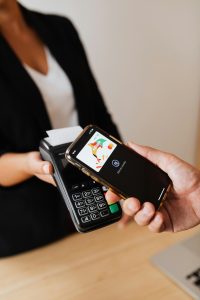
Invisible payments are becoming increasingly common in restaurants, and they’re a great tool for reducing dine-and-dash incidents. One example is using a QR code: customers simply scan it with their phone, browse the menu, place their order, and pay before submitting it. This approach is smart because it removes the need to flag down a server to take the order, while also helping the restaurant protect itself from theft. Although invisible payments aren’t widespread yet, they’re likely to become much more common in the coming years as technology continues to advance.
2. Adding AI
One thing a customer should never do when witnessing a dine-and-dash is chase after the dasher. There’s always a risk that the individual could be armed. The safest approach—and what many restaurants are doing now—is to install high-quality cameras that can clearly capture the perpetrator. There is also advanced AI facial-recognition technology that scans a person’s face as soon as they enter a place. Their faces are documented on the server, making it easier to identify who is who. With technology like this, it becomes far more intimidating for someone to walk into a restaurant and attempt a crime.
3. Speed It Up

Not every solution relies on the latest tech — for example, one surprisingly effective tactic is providing faster, more attentive service. You might wonder how that helps prevent someone from walking out without paying, but the reason is quite simple. When a server is distracted or busy elsewhere, it becomes easier for that customer to slip out unnoticed. Faster, more attentive service makes it harder for someone to leave without paying. It also makes it easier for staff to notice if a customer gets up before settling the bill and helps servers spot a customer heading towards the door before paying. Sometimes a calm, friendly reminder can usually nip any bad situation in the bud. And remember to never chase a dasher!
Consequences
Consequences vary by state. For example, in Florida, “dine and dash penalties can be severe. A theft of more than $300 can carry up to five years in prison and a $5,000 fine.” While consequences like this can be intimidating enough to discourage a potential crime, there are still plenty of people who do it. Creating a safe environment for both employees and customers is essential. When safety is compromised, it can make staff feel uncomfortable or at risk while doing their jobs, which may affect morale and retention. Situations involving dine-and-dash incidents — especially when there’s a potential for confrontation — can make an already challenging job feel even tougher. Considering both employee well-being and customer confidence is key to keeping the restaurant running smoothly.
Conclusion

While dine-and-dash incidents are on the rise, technology is evolving to help restaurants respond. But tech works best when paired with well-prepared staff. That’s why it’s important to make sure employees receive up-to-date training, such as the CrewSafe Employee Safety Awareness poster program. Our December 2025 poster on Security and Crime Prevention covers this topic specifically, offering tips on how to deal with crimes in the workplace and how to react and stay calm in stressful situations.